
In today’s digital age, data privacy and protection have become paramount. The General Data Protection Regulation (GDPR) was introduced in 2018 to ensure businesses responsibly handle personal data. For businesses with online booking systems, complying with GDPR is not just a legal requirement but also an opportunity to build trust with customers. This article will guide you through the process of creating a GDPR-compliant online booking system for your business.
Why do hospitality businesses need to create GDPR-compliant Online Booking Systems?
Hospitality businesses, such as hotels, travel operators, and other tourism companies that collect and process personal data from EU residents, are required to comply with the General Data Protection Regulation (GDPR). This includes ensuring that their online booking systems are GDPR compliant.
It’s worth remembering that GDPR applies to any organization that processes the personal data of EU residents, regardless of the organization’s location.
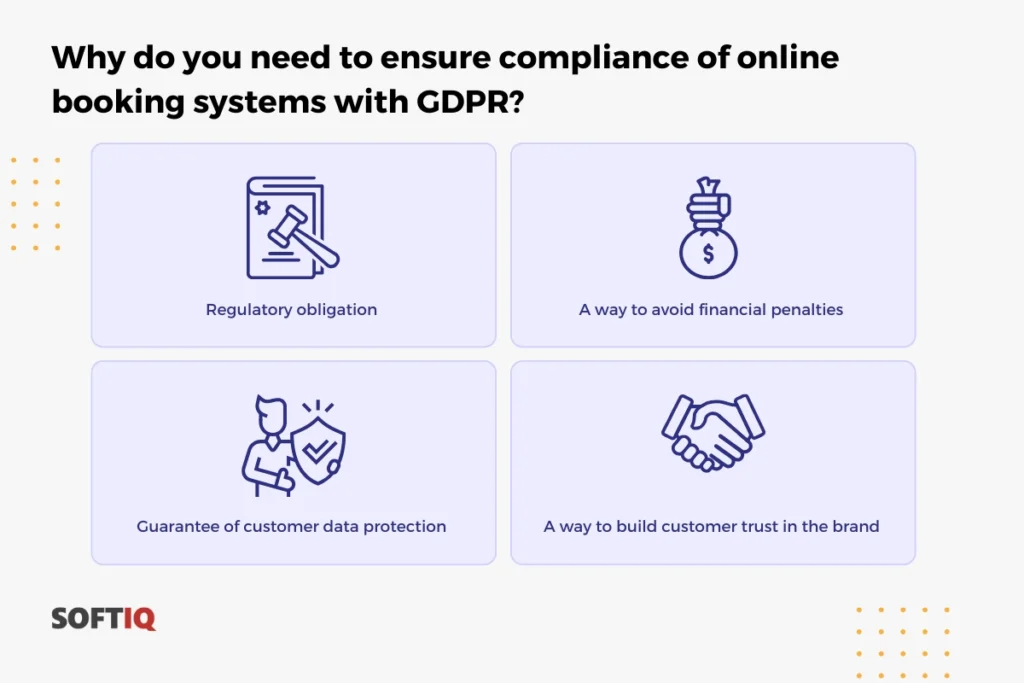
Some of the reasons why hospitality businesses need to create GDPR-compliant online booking systems include:
- avoiding fines and penalties – the GDPR can impose significant fines for non-compliance, up to €20 million or 4% of global annual turnover, whichever is higher,
- protecting customer data – hospitality businesses collect a large amount of personal data from customers, such as names, addresses, email addresses, and passport numbers. This data is sensitive and needs to be protected from unauthorized access, use, disclosure, alteration, or destruction,
- building customer trust – customers are increasingly concerned about how their personal data is being collected and used. By complying with the GDPR, hospitality businesses can demonstrate to their customers that they are taking their privacy seriously.
All of those aspects are important, but for many companies perspective of financial consequences might be the main factor encouraging them to stay GDPR compliant.
There are already 2 well-known examples of huge fines issued to companies handling data of EU tourists:
- a British airline was fined 22.4 million GBP for processing a significant amount of personal data without adequate security measures in place, which resulted in hackers stealing the personal data of more than 400.000 customers,
- the large, international hotel chain had to pay 18,4 million GBP after failing to implement appropriate security measures to secure data stored in their booking system, and as a result, exposing the personal data of over 339 million guest records.
Understanding the key principles of GDPR compliance
Before diving into the implementation process, it is essential to understand the key principles of GDPR compliance.
GDPR emphasizes the protection of individual’s personal data and sets out several fundamental principles that businesses must adhere to.
These principles include the lawful, fair, and transparent processing of personal data, limiting data collection to what is necessary, ensuring data accuracy, and implementing appropriate security measures to protect personal data.
Assessing your current online booking system for GDPR compliance
If you are already using an online reservation system and you would like to know if it is GDPR compliant you should first of all conduct a thorough review of your system’s data collection, storage, and processing practices.
Identify any potential gaps or vulnerabilities that might compromise GDPR compliance. This assessment will provide you with a clear understanding of what changes must be made to ensure compliance.
We have prepared a practical checklist, which will help you in such an assessment. It includes the 10 most important obligations and guidelines that you should take into account to ensure compliance with the GDPR.
Steps of creating a new, GDPR Compliant Online Booking System
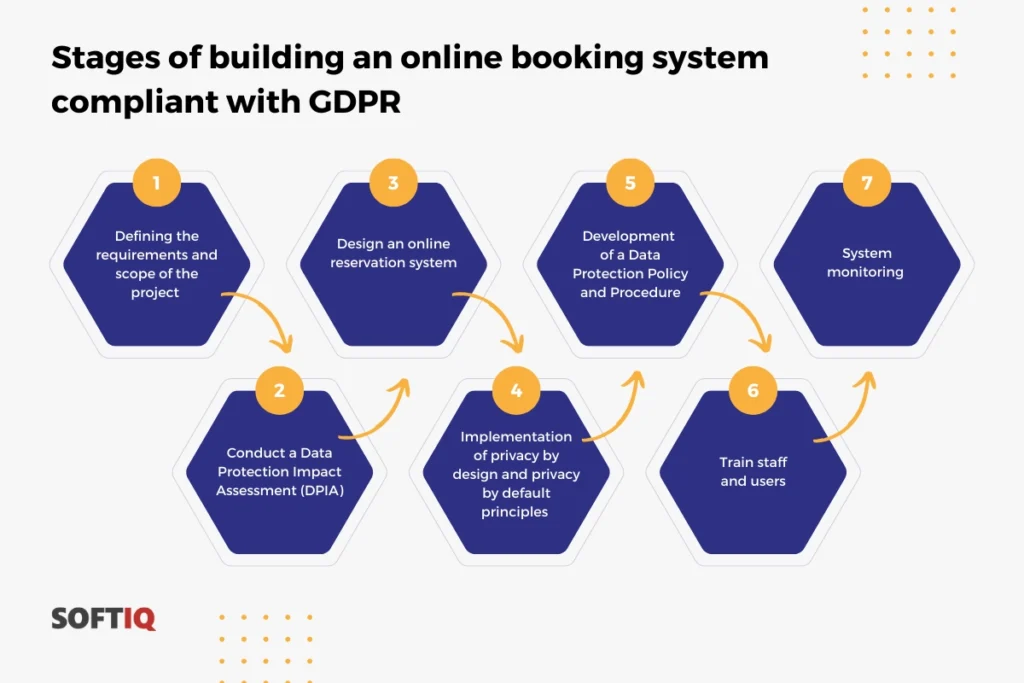
When your company needs to build a new, secure, and regulatory-compliant online reservation software, you should find a trusted partner, a software house such as SOFTIQ, that will be able not only to build the system for you, but most of all help you with it’s planning and assuring the full compliance with the data protection laws.
Here are the main steps for creating such a system:
Step 1: Define the Requirements and Scope of the Project
- Collaborate with the software house to define the requirements and scope of the project, including the features and functionalities that the online booking system must have.
- Identify the target audience and the types of data that will be collected, processed, and stored.
- Determine the necessary legal and technical measures to ensure GDPR compliance, such as obtaining consent, providing privacy notices, and implementing data protection by design and by default.
Step 2: Conduct a Data Protection Impact Assessment (DPIA)
- Carry out a DPIA to identify and assess the potential risks associated with the online booking system, such as data breaches, unauthorized access, and data subject rights.
- Identify and implement appropriate measures to mitigate these risks, such as encryption, access controls, and incident response plans.
Step 3: Design the Online Booking System
- Work with the software house to design the online booking system, taking into account the GDPR requirements and the results of the DPIA.
- Ensure that the system is designed with privacy and data protection in mind, using secure protocols and encryption to protect sensitive data.
- Implement user-friendly interfaces that are easy to understand and use, and provide clear and transparent privacy notices and information about how data will be used.
Step 4: Implement Data Protection by Design and by Default
- Ensure that data protection is integrated into the design of the online booking system, using techniques such as data minimization, pseudonymization, and anonymization to reduce the risk of data breaches and unauthorized access.
- Implement default settings that are privacy-friendly and secure, such as requiring explicit consent for data collection and processing, and providing users with control over their personal data.
Step 5: Develop a Data Protection Policy and Procedure
- Develop a comprehensive data protection policy and procedure that outlines how the online booking system will collect, process, and store personal data.
- Ensure that the policy and procedure are easily accessible to users and provide clear instructions on how to exercise their data subject rights.
Step 6: Train Staff and Users
- Provide training to staff and users on the GDPR requirements and the online booking system, including how to handle sensitive data, how to respond to data subject requests, and how to report data breaches.
Step 7: Monitor and Review the System
- Regularly monitor and review the online booking system to ensure that it remains GDPR-compliant and effective.
- Update the system and its components as necessary to reflect changes in technology, data protection laws, and user needs.
Remember, that by staying proactive and vigilant, you can ensure that your online booking system remains GDPR compliant.
Summary
Creating a GDPR-compliant online booking system is not just about meeting legal requirements.
By prioritizing data privacy and protection, you build trust and credibility with your customers. GDPR compliance demonstrates your commitment to handling personal data responsibly, which can lead to increased customer loyalty and satisfaction. Furthermore, a GDPR-compliant online booking system minimizes the risk of data breaches and potential legal consequences.
By following the step-by-step process outlined in this article, you can create a robust and GDPR-compliant online booking system that enhances your business’s reputation and protects the privacy of your customers.
Would you like to ensure your online booking system is GDPR compliant and build trust with your customers? If you have any doubts, contact our experts and schedule a free meeting, so we can help you assess your needs and plan appropriate actions.